Peptide Quality Assurance & Pureness Screening Boc Scientific Researches
Peptide Top Quality: Significance Of Third-party Validation
An approved laboratory adheres to strict standards for test precision and approach recognition. You can commonly examine if a lab is recognized using its internet site or paperwork; certification makes sure the laboratory's procedures and results are held to worldwide requirements. With high levels of experience in carb chemistry and our detailed peptide evaluation platform, Creative Peptides can supply top notch peptide pureness resolution solutions. According to strict evaluation quality assurance and biosynthetic quality control criteria, each peptide is purely kept an eye on during the analysis Find out more cycle.In vivo tests assess absorption, circulation, metabolic rate, and excretion (ADME) attributes, additionally confirming effectiveness and security. These testing solutions not only help clients maximize products precisely during growth however likewise provide solid data support for regulative compliance of peptide formulas. Beware of COAs that give a purity number without any sustaining chromatographic information, record purity without defining the analytical approach, or listing a molecular weight without mass spectrometry confirmation. Tandem mass spectrometry (MS/MS or MS TWO) pieces the peptide ions in the gas stage and analyses the fragment masses. This is the gold requirement for peptide identification-- it confirms both the make-up and the sequence. For several peptide projects, absolute peptide amount matters as much as chromatographic purity.
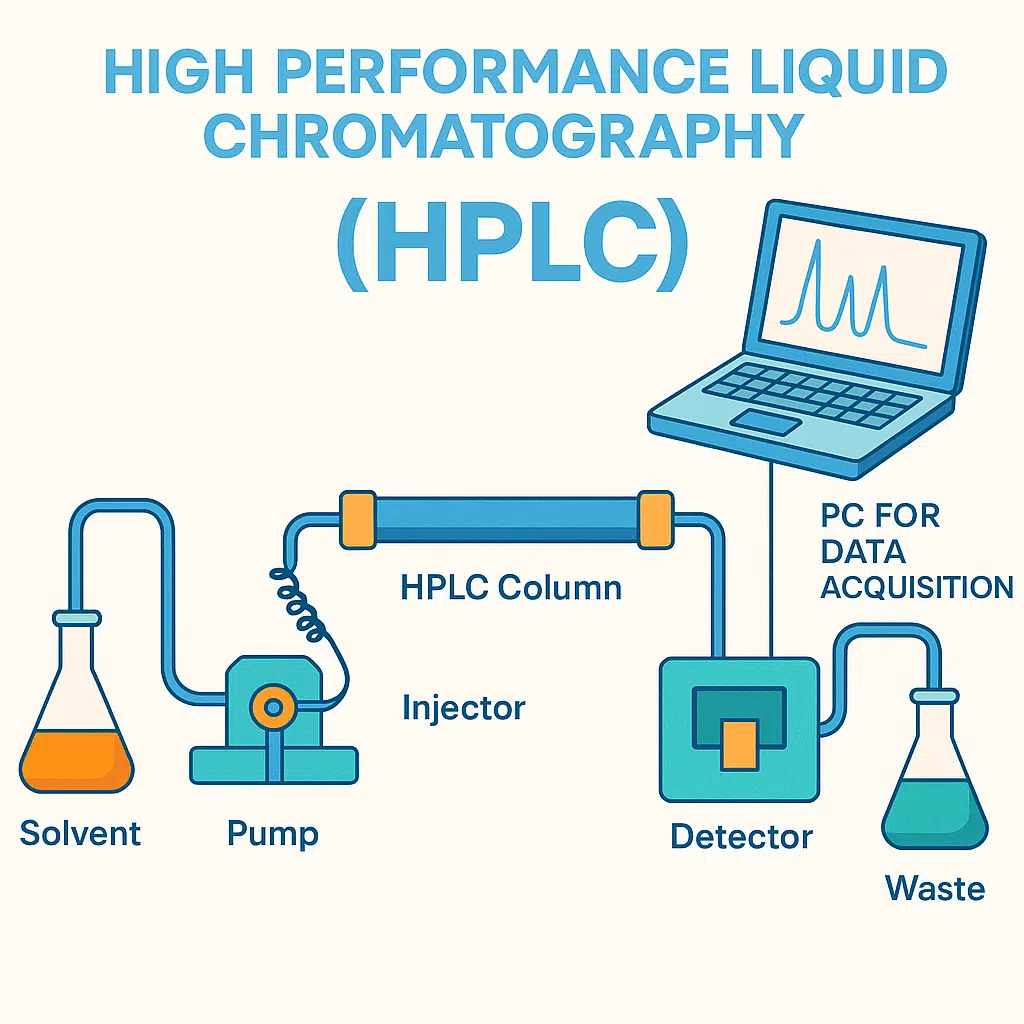
Peptide Testing: Hplc & Mass Spectrometry Pureness Verification
- We use GC-MS, ICP-MS, and other approaches to discover impurities, making certain item safety and security and regulatory compliance.
- Peptide purity is normally shared as a percent, such as 95% or 98%.
- Lab validation for peptides implies making use of scientific tests to verify a peptide's identity, pureness, and composition.
- This is why trusted vendors provide both HPLC and MS data on their Certificates of Analysis.
The liquified peptide example is injected into a stream of liquid solvent (the mobile phase) that flows via a tube packed with small fragments (the stationary phase). Different particles "stick" to those particles with various toughness, so they travel via the column at various speeds. Subtle distinctions in resources pureness and structure can result in disparities in the activity of the final product.
Basic Pureness (≥ 95%)
Peptide pureness refers to the quantity of the right peptide in the peptide item. However, for complete quality evaluation or the characterization of peptides for a range of applications, added analytical examinations are suggested. As an example, in order to ensure success in numerous peptide experiments, it may be necessary to remove trifluoroacetic acid (TFA), or to evaluate the solubility of hydrophobic peptides prior to performing the needed experiments. Throughout the detection, we make use of RP-HPLC incorporated with MS to figure out the molecular weight of the peptide. The absolute amount of the appropriate peptide in an example is the product of the peptide web content and the peptide purity. BOC Sciences has a top-tier peptide top quality testing system, integrating advanced logical technologies and premium instrumentation to offer accurate and effective peptide top quality analysis solutions.

Innovative Peptides suggests a series of various pureness levels to assist you choose the appropriate peptide purity for peptide-based assays and applications. The adhering to listing reveals the suggested peptide pureness degrees required for different peptide applications. Peptide identification is mainly performed using mass spectrometry (MS), which gives precise dimensions of peptide molecular weight. Additionally, strategies such as amino acid analysis and HPLC are used to validate the peptide's identification and pureness, making certain exact characterization for various applications. We supply peptide identification confirmation utilizing mass-based approaches selected for the sample and logical function. This is important when the primary inquiry is whether the observed part matches the desired peptide or whether a modification has been integrated as expected.
Examinations can be conducted using high-precision stablizing chambers, replicating different settings, and using global standards to study short-term and long-term stability, important for consistent peptide efficiency. Some peptides fall short not since the sequence is incorrect, however because their physical actions in actual solvents is improperly comprehended. We provide physical building screening that aids teams work better with difficult examples. Mass spectrometry validates whether the measured mass matches the anticipated peptide mass. The chromatogram is one of the most essential visual information element on an HPLC peptide test report. It is a chart with time on the horizontal axis and detector action, typically UV absorbance, on the upright axis. Trustworthy peptide testing laboratories will certainly supply a suite of modern analytical strategies-- HPLC combined with MS is a must, and schedule of added techniques like capillary electrophoresis or amino acid evaluation is a bonus offer. Be cautious of labs that do not use mass spectrometry along with HPLC, as this might miss crucial identification information. Similarly, avoid laboratories that can not show confirmed logical techniques. According to ICH standards, validated techniques indicate the lab has developed the test's precision, accuracy, discovery restrictions, and so on, making sure the information you get are dependable.